
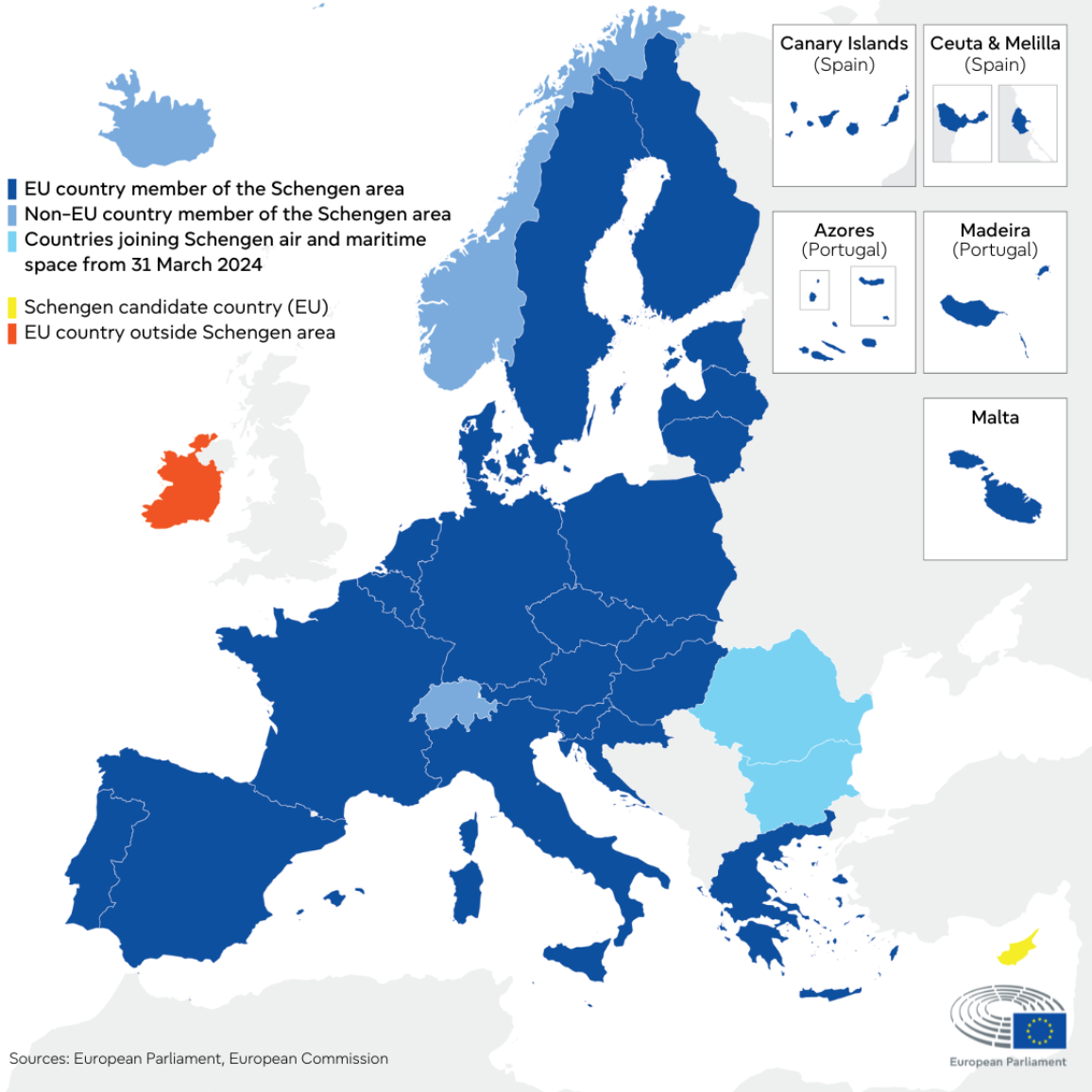
The Council of the European Union has adopted an update to the Schengen Borders Code, enhancing the resilience and functionality of the Schengen Area. This revision is designed to bolster the area’s ability to handle crises while preserving the freedom of movement. Key aspects include:
- Public Health Emergencies: The updated code allows for the limitation of entries from non-EU countries during public health crises, ensuring a coordinated response.
- Migration Management: New procedures are introduced for managing significant migration inflows, providing clearer guidelines for member states.
- Internal Border Controls: The update provides detailed guidelines on the temporary reintroduction of internal border controls, ensuring they are used only when necessary and proportionate.
- Harmonized Travel Restrictions: During health emergencies, the code introduces harmonized travel restrictions to maintain consistency across the EU.
- Enhanced Border Surveillance: Increased emphasis on border surveillance aims to improve security and manage irregular migration more effectively.
The update also aligns the Schengen Borders Code with the European Travel Information and Authorisation System (ETIAS), which will be operational from mid-2025. ETIAS will enhance security by pre-screening travelers from visa-exempt countries before they arrive in the Schengen Area.
These changes reflect the EU’s commitment to maintaining the integrity and security of the Schengen Area while adapting to new challenges. The updated code aims to ensure a balanced approach to border management, combining freedom of movement with enhanced security measures.
Leave a Reply