
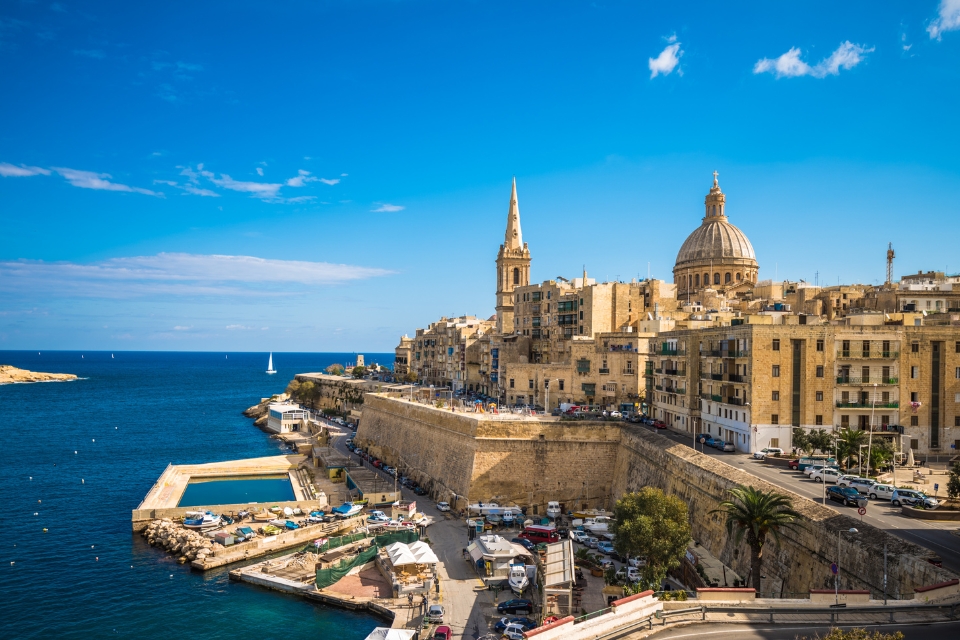
Malta’s tourism numbers in early 2026 tell a compelling story. Nearly 250,000 visitors arrived in February alone—an increase of nearly one-fifth compared to the same month the previous year—with spending reaching €171.7 million in a single month. For travelers planning trips to Europe’s Mediterranean islands, these figures matter because they reveal how busy border systems actually are when ETIAS and the Entry/Exit System (EES) are operating at scale. Understanding these layers of border authorization is essential before you book your trip.
The island nation sits at a fascinating intersection of travel dynamics. More than 90 percent of February’s visitors came for leisure, with the largest clusters arriving from the United Kingdom, Poland, and Italy. That diversity of origin is important: UK visitors, as non-EU citizens, face different registration requirements than their European neighbors under the EU’s new border framework. This isn’t just administrative trivia—it shapes how long you might spend at the airport and what documentation you’ll need before departure.
How Travelers Actually Use Malta
The visitor profile reveals patterns that matter for anyone planning a Mediterranean getaway. The average stay stretched just over five and a half nights, with most travelers choosing private rental accommodation rather than hotels. Across the islands, visitors spent an average of €125.80 per person daily. One striking detail: more than 40 percent of all arrivals ventured to Gozo and Comino, the smaller islands, meaning they crossed internal maritime borders during their stay. This creates additional tracking challenges for authorities managing border systems across multiple entry and exit points.
The logistics become more complex when you consider that nearly 1.4 million guest nights were recorded in February alone. That volume, spread across airports, ferry terminals, and smaller ports, represents exactly the kind of real-world pressure that border systems like EES are designed to handle. For travelers, it means understanding not just the authorization required to enter, but how your movement through the Schengen area gets tracked once you’re there.
ETIAS, EES, and What Travelers Actually Experience
Europe’s new border authorization framework operates in layers. ETIAS is the pre-travel authorization you obtain before departure—a digital screening system that processes your application online and delivers a decision within days in most cases. The Entry/Exit System (EES), which launched across the Schengen area on April 10, 2026, is something different: it’s the biometric registration you undergo at the border itself, capturing fingerprints and facial recognition data for non-EU visitors.
For Malta specifically, this means non-EU travelers—including UK nationals, Americans, Australians, and most other visa-free nationalities—will encounter both systems. You apply for ETIAS weeks before travel, then submit to EES registration when you physically arrive. Malta’s high volume of UK visitors makes this dual-layer system particularly visible. With nearly a quarter-million people passing through borders monthly, and growth continuing year over year, the infrastructure handling these processes operates under genuine pressure.
What makes this relevant is timing. The February data predate the full EES rollout, so the numbers we’re examining were collected under the previous border registration system. Early reports from other high-traffic Schengen destinations suggest EES implementation added minimal delays for most travelers—typically just a few minutes per person. However, during peak arrival periods or at understaffed border posts, delays can accumulate. Understanding this helps you plan realistically: if you’re arriving during peak summer months when Malta sees even higher volumes, extra time at the airport isn’t paranoia—it’s practical preparation.
The Authorization Landscape for Mediterranean Travel
Malta’s position within the Schengen area means your ETIAS status doesn’t change based on destination within the zone. Once approved, your authorization covers travel across all 29 Schengen countries. However, this doesn’t mean borders disappear. You’ll still present your passport and authorization at entry, and you’ll register biometrically under EES if you’re a non-EU citizen. The difference is that these processes are standardized across all member states, so the experience in Malta mirrors what you’d encounter in Italy, Spain, or Greece.
One detail that surprises many travelers: your EES registration—your biometric data—follows you throughout the Schengen area. If authorities in one country flag your entry, those records are accessible to border officials in every other Schengen country. This isn’t meant to alarm you; it’s simply how the integrated system works. For legitimate travelers, it’s invisible. But it underscores why accurate information on your ETIAS application matters profoundly. Inconsistencies between your application and your passport, or gaps in your travel history if you’ve overstayed elsewhere in Europe, can complicate entry even to countries where you’ve never been.
Practical Implications for Your Malta Trip
If you’re planning travel to Malta or combining it with other Mediterranean destinations, several practical considerations follow from understanding these systems. First, apply for your ETIAS authorization at least two weeks before departure, though most approvals come within days. Have your valid passport ready—it’s the document against which all border checks occur. If your passport expires soon, renew it before applying, because ETIAS is tied to your specific passport number.
Second, if you’re a non-EU citizen, expect the EES biometric process. It’s straightforward: you’ll stand at a kiosk or counter where your fingerprints and photograph are captured. Processing is usually swift unless the system flags inconsistencies. Arrive at the airport well ahead of your departure time. While Malta’s tourism authority and Schengen border officials have optimized processes for high-volume arrival periods, unexpected delays do occur, and stress isn’t worth saving 30 minutes.
Third, if you’re combining Malta with other European stops, remember that your first entry point is where EES registration happens. If you fly into Malta and later travel to Italy or Spain by ferry, subsequent border crossings within Schengen typically involve only passport checks, not repeated biometric registration. This matters for scheduling—don’t assume every border crossing requires the same time investment.
Finally, stay aware of your ETIAS authorization status. It’s valid for three years or until your passport expires, whichever comes first. If you lose your passport mid-trip or it’s damaged, your ETIAS becomes invalid and you’ll need emergency documentation from your embassy. Malta’s popularity means consulates can be busy during peak season, so protecting your travel documents is practical wisdom, not excessive caution.
The broader context is that Malta’s tourism boom, while wonderful for the island’s economy, illuminates how modern European travel authorization systems function under real pressure. The volumes are substantial, the systems are new, and the coordination required across multiple countries is genuinely complex. Your role as a traveler is to understand these systems, prepare thoroughly, and move through borders with realistic expectations. The good news: the infrastructure is designed to move people efficiently, and legitimate travelers rarely encounter serious obstacles. But awareness beats surprise every time.
For the most current information about ETIAS requirements, processing times, and entry rules, consult the official EU ETIAS portal and Malta’s tourism authority before booking your trip. Border systems evolve, and official channels always reflect the latest guidance.
For more on how this connects to Malta’s Tourism Boom and ETIAS, see Malta’s Tourism Boom and ETIAS: What Travelers Really Need to Know.
This article was last updated July 9, 2026. As border systems and authorization requirements continue to develop across the European Union, travelers are encouraged to verify current specifications through official EU government resources before finalizing travel plans, rather than relying solely on published articles.
Leave a Reply